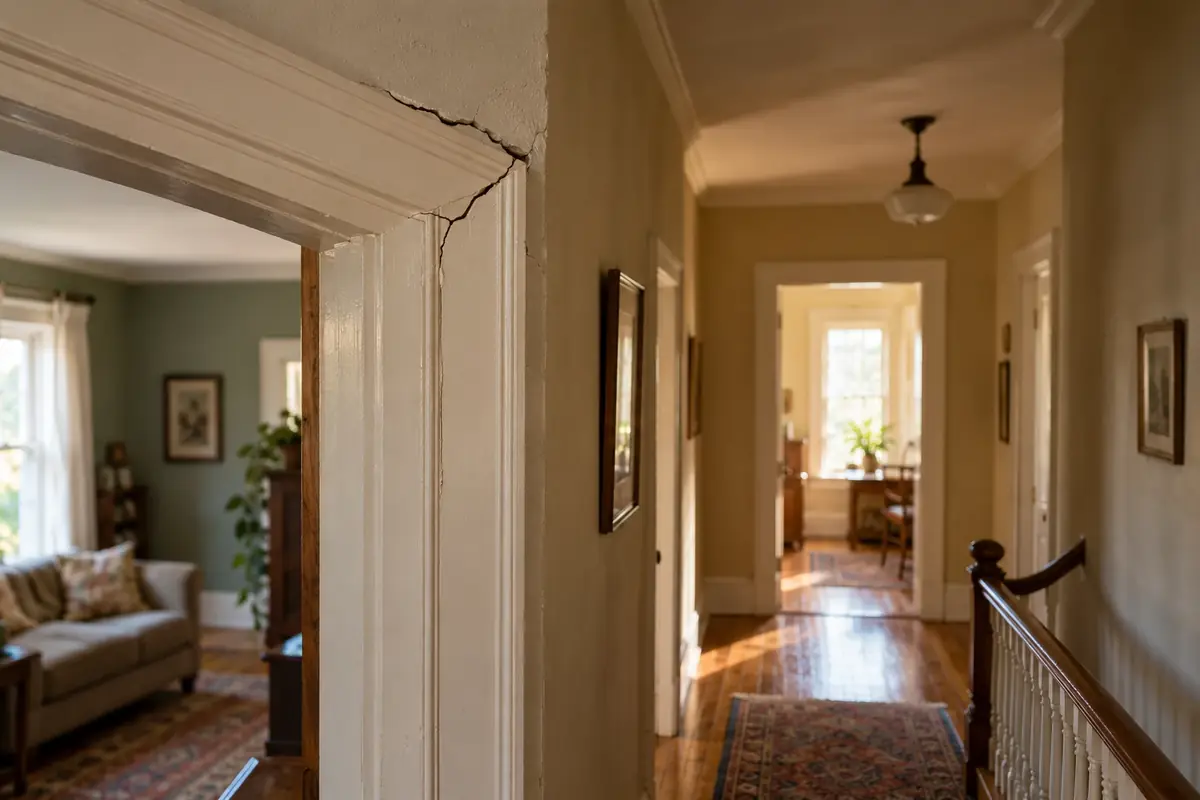
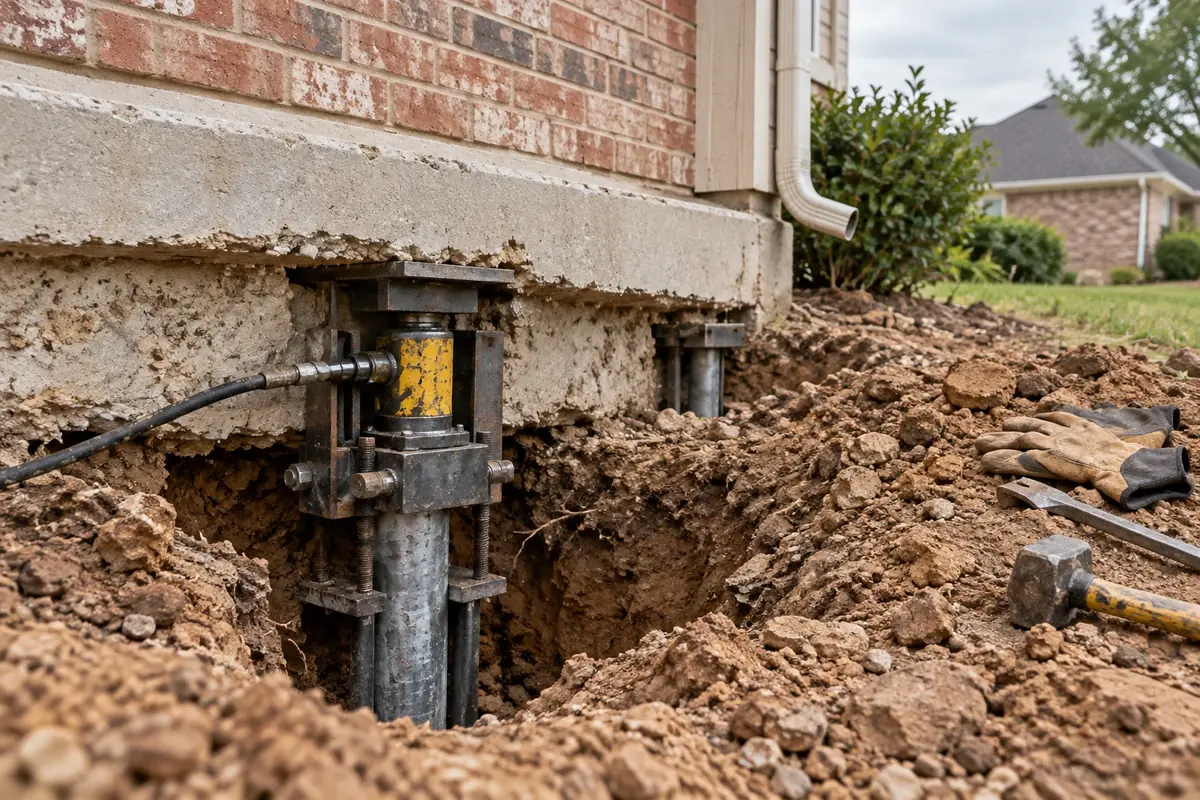
Cracks in walls, brick or slab
Tell us where the cracks are, roughly how wide, and whether they've grown.
CEDAR PARK, TEXAS
Tell us what you're seeing at your home.
Cedar Park has a mix of shallow limestone and expansive clay, sometimes within the same neighborhood. We're planning a local foundation repair referral service and want to hear what Cedar Park homeowners are dealing with.
Tell us about your projectTell us what's going on and we'll review your request for a contractor introduction.
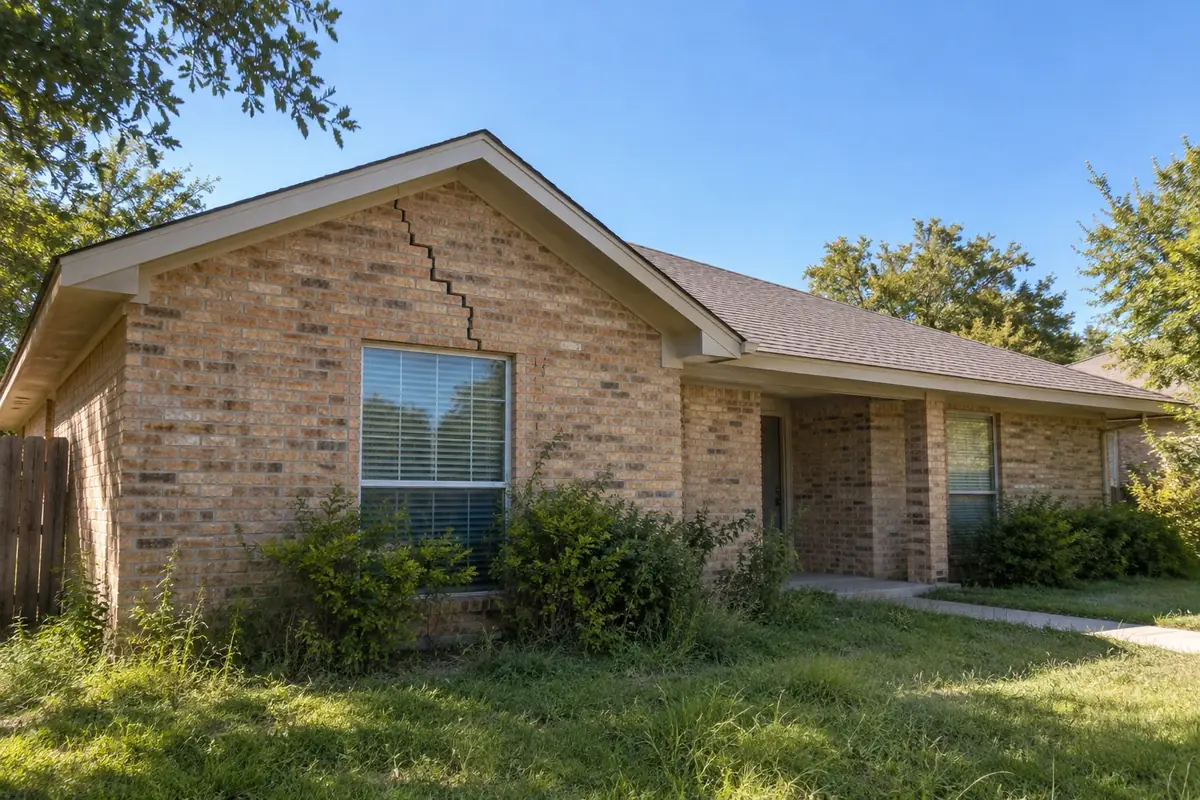
Stair-step brick crack
A common warning signTHE PROBLEM YOU'RE SEEING
You don't need a diagnosis. Tell us what you've noticed, whether the house is on a slab or pier and beam, and how long it has been going on.
Tell us where the cracks are, roughly how wide, and whether they've grown.
Describe which doors or windows stick and which rooms feel sloped.
Already have a quote or a suspicion? Tell us what you were told and we'll take it from there.
YOUR PROPERTY
Let us know where the home is, what you're seeing, what kind of foundation it has, and how soon you'd like it looked at.
“Diagonal cracks over two doors, the back bedroom floor slopes, house is on a slab, built in 2008.” That gives us something useful to work with.
We review each request and look for a contractor who serves the area and type of work you describe.
We'll review your project details and follow up about the next step. We won't share your contact information with a contractor without your permission.
BEFORE YOU CALL A CONTRACTOR
Cedar Park's ground changes from limestone to clay depending on where you are, and the repair that fits one lot may not fit the next. These notes cover the local ground, what repairs cost, and what to check before you sign.
One local guide describes Cedar Park as a mix of shallow limestone and expansive clay depending on elevation: higher ground near the Balcones Escarpment leans toward limestone, and lower areas have deeper clay. It says homes often see problems tied to the transition between the two, and that where thin clay sits over limestone, settling can be rapid (Austin Foundation Guide). Ask any contractor which ground your lot is on.
The same guide notes that bedrock can be an advantage for repair, because steel piers can reach refusal at shallower depths than in deep clay, which can lower the per-pier cost. Whether that applies to your home depends on how deep the rock actually is under it.
Several of these can also come from normal settling or other causes. Hairline cosmetic cracks are common; cracks that widen, or several signs together, are worth an inspection (Level Up Construction).
The same guide puts a typical Cedar Park repair at about $3,000 to $7,500, with most homes needing 6 to 12 piers at roughly $1,000 to $3,000 each, and suggests a structural assessment at $300 to $600, especially when buying a home in Williamson County (Austin Foundation Guide). That is a lead-generation site's estimate, and bigger jobs cost more. Compare written quotes.
If you are buying rather than repairing, a structural assessment before closing is worth considering, because cracks and door problems can be a sign of movement rather than cosmetic wear.
See foundation repair in Round Rock and Georgetown.
Local Project Guide is a new referral service run by Jon Staples. We read every request, and we do not share your contact details with a contractor without your permission. See the About page and the privacy notice.
Cost figures come from the linked sources, are estimates, and vary by site and contractor. Last checked September 2026. This is general information, not legal, engineering, or environmental advice.